

The Invisible Art of Guiding the Gaze
How film, XR, and generative media choreograph attention and why it matters

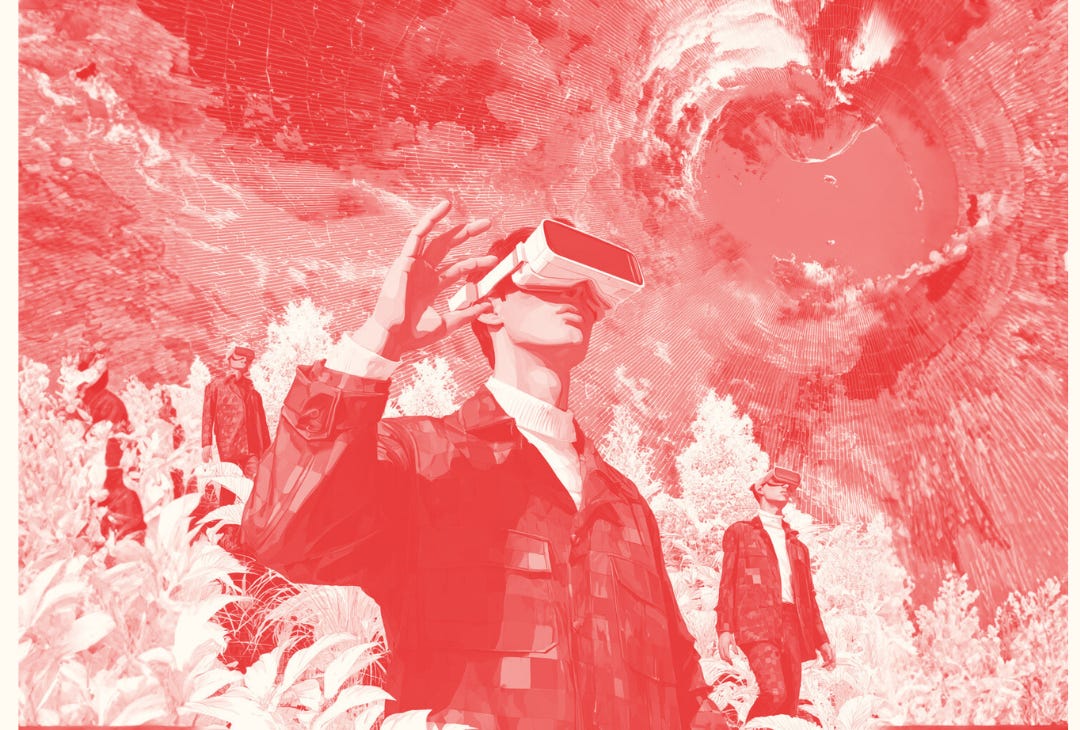
The internet is a firehose of information. The problem isn’t the volume, it’s the chaos of where our eyes are supposed to land.
Why do some videos feel hypnotic while others just feel like noise? Why does one film transport you completely while another leaves you reaching for your phone?
The answer lies in an invisible art: the choreography of focus.
The first time I heard this phrase was from Aditi Rajapagopal, Experience Designer at Atlantic Studios, during our conversation for the Unmissables podcast.
It’s the invisible architecture of every great experience, whether you’re in a theater or wearing a headset. It’s the silent language creators use to tell your eyes exactly where to go, and in what order. (Walter Murch explores this In the Blink of an Eye)
Think of it like a three-part sequence:
Anchor: The initial moment your attention lands.
Cue: The subtle signals, a shift in light, a gesture, a sound that pulls you forward.
Shift: The transition that moves you to a new moment without breaking your immersion.
When creators nail this sequence, your brain never feels lost. Instead, it feels present. And presence is the magic ingredient that makes a story stick.
Focus in Action: From Film to AI
This choreography shows up across every medium, often in surprising ways. I’m not a film buff, but this was my exploration of the concept across mediums and what I took away from it.
Film: Focus as Intimacy
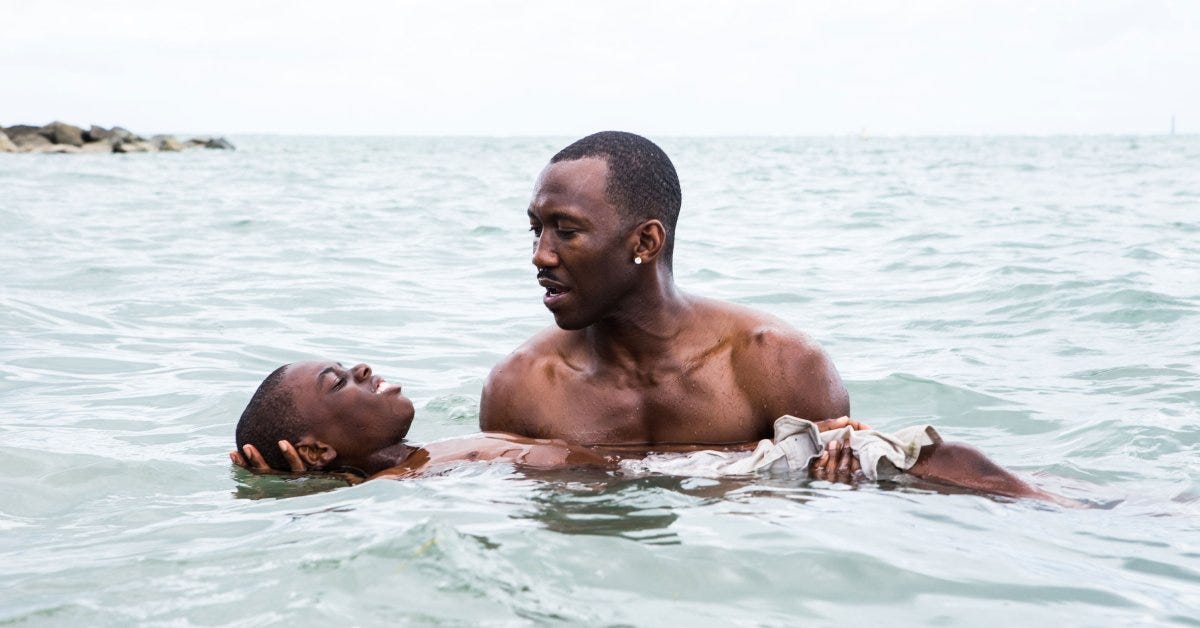
Moonlight proves silence can be louder than dialogue. The way Chiron’s face fills the frame pulls you so close, you’re practically breathing with him. Edited by Joi McMillon, the first Black woman Oscar-nominated editor & directed by Barry Jenkins, created a film that stays with you.
Everything Everywhere All At Once could have been visual chaos. Instead, the Daniels guide you across universes with sharp cues, a googly eye, a bagel, a gesture. So even in maximalist madness, you never feel lost.
Performance: Focus as Gesture
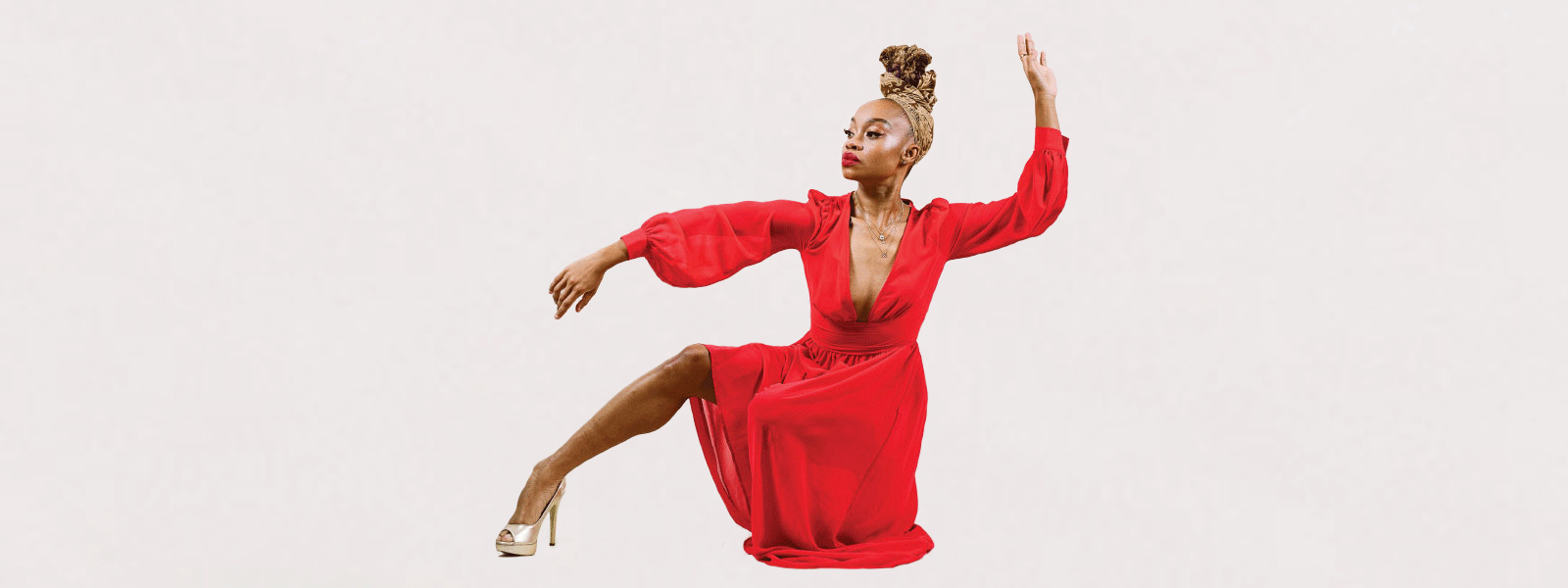
Choreographer Camille A. Brown builds stillness and micro-gesture into her works, the smallest hand movements she makes can hold a room.
Beyoncé’s Homecoming is a masterclass in directing the gaze. Amid dancers, brass bands, and a stadium crowd, your eye always lands on her chosen cue: a raised fist, a single step, a costume change.
XR & Immersive: Focus as Presence
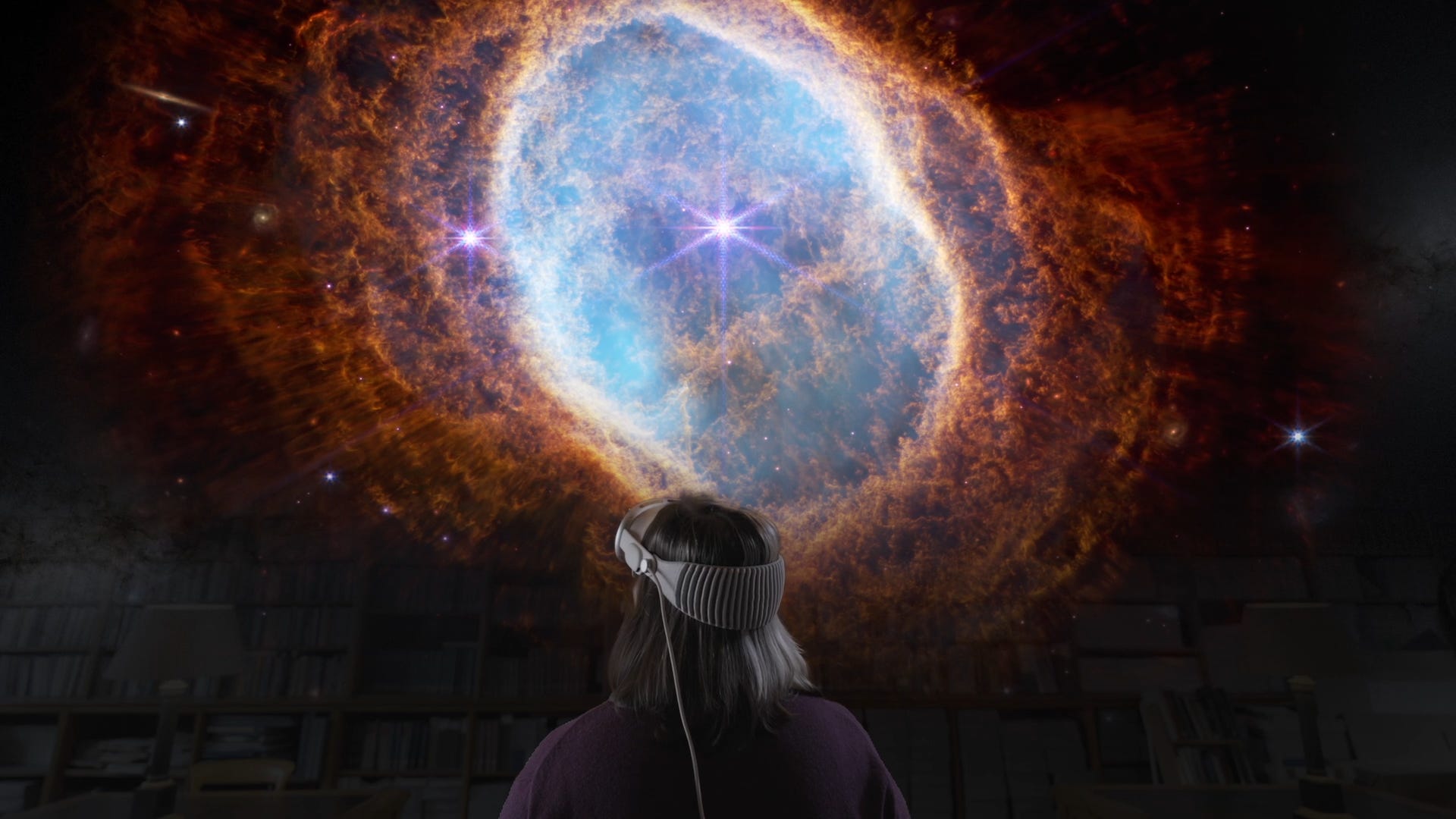
Cosmos in Focus (Aditi Rajagopal & Atlantic Studios) uses spatial cues so you can feel the vastness of space around your body using the James Webb Telescope data.
Tamara Shogaolu’s VR narratives in Queer in the Time of Forced Migration (Ado Ato Pictures) layer voice, movement, and proximity to make migration and queer identity stories both immersive and deeply human.
Generative & Emerging Tech: Focus in Code
Paul Trillo experiments with AI to choreograph motion and pacing, guiding the viewer’s gaze through surreal, prompt-driven sequences.
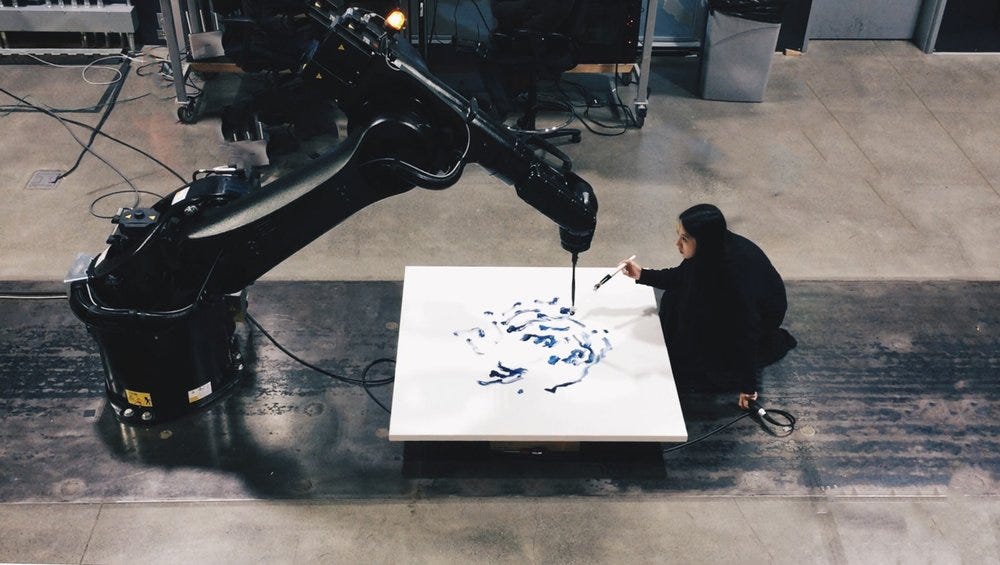
Sougwen Chung uses AI-powered robotic arms to draw with her in real time, turning focus into a live duet between human gesture and machine precision.
How This Can be Misused
Directing attention also means deciding what stays unseen. And those omissions carry just as much weight as what’s highlighted.
Generative propaganda. Deepfake political ads already use motion and pacing to hide bias while amplifying spectacle. Focus can manipulate as easily as it can clarify.
Immersive exclusion. If XR cues ignore accessibility, like left-handed navigation, captions, or cultural context, whole groups are excluded from the experience.
Data theater. We’ve all sat through flashy dashboards and overdone data visualizations that bury meaning under spectacle, creating mental load on the viewer to make sense of it. Focus can clarify or it can distract.
The ethical question here is whose gaze are we centering, and who gets erased in the process?
When it’s done with care, choreography isn’t about control at all. It’s about whether you feel lost or guided.
Your Turn: A Few Experiments
You’re already choreographing focus, think slides, dashboards, interfaces, TikToks. The only question is whether you’re doing it with a specific intention in mind.
Screenshot audit. Pause a film you love or a video that caught your attention. Where do your eyes go first? How does it make you feel? Anchor, Cue, Shift.
VR experiment. Try NeuroSpeculative AfroFeminism, Cosmos in Focus or Letters from Drancy. Track how your gaze is pulled, and where you engage.
AI test. Use Runway, Veo or Pika to generate video. Prompt once without motion cues, once with. Notice how coherence and rendering changes.
Deck prototype. Apply Anchor–Cue–Shift to a deck of your own work. See how it reads differently and what it drives.
Product Teams. The choreography of focus is as real in your onboarding flow as it is on stage: what do you want the user to notice first, next, last?
The truth is: we all choreograph focus in one way or another. Too often, we chase seamlessness and forget care. Because attention becomes emotion, emotion becomes memory, and memory is how stories live on.
One more thing, If your cues only work for one type of user — say, sighted or English-speaking, you’re failing access. and yes it matters.
Signals to Watch: Things I’m Paying Attention To
Your brain on ChatGPT. MIT Media Lab study sparks global headlines about how large language models are shaping human cognition and public sentiment.
Doctors Got Worse at Detecting Cancer After Relying on AI. A gut-check that “AI + human” doesn’t automatically mean better outcomes. Over-reliance can backfire.
Death of the Double Diamond? Board of Innovation proposes the “Stingray Model” as a new framework for AI-powered design as an evolution of the double diamond.
Design as infrastructure. The Trump administration quietly fired the most talented designers and engineers (18F) and then started a new executive order to fix the “government’s design problem”.
Not every season needs sprint energy. Out of Office reframes “slow summers” as deliberate, strategic pauses that recalibrate creative growth, not stall it.
Fear as innovation’s bottleneck. My friend Katie writes in Fast Company that it’s not lack of ideas that keeps orgs from moving forward, it’s fear. A sharp read on courage as a design constraint.
Perplexity takes aim at Chrome. The AI search startup’s bold bid shows the browser wars may be just beginning. Have you tried it?
Google tweaks the search contract. Users can now set preferred sources directly inside results, a subtle but seismic shift.
Femtech consolidation. Ultrahuman acquires viO HealthTech to expand into ovulation and cycle tracking, with a greater ambition to consolidate health data.
Ageism in creative work. Is the industry quietly sidelining older talent? A candid community pulse-check on the Creative Boom.
Tune in to my conversation with Aditi on all things immersive storytelling, choreography of focus, and much more.
Thanks for reading this week’s Unmissables. I started writing these to make sense of where tech, design, and culture intersect and the questions that keep coming up for me. The best part is hearing what sparks for you.
💬 Drop a comment: What should I explore next? What signals are you watching? Who would you love to see me chat with on the podcast?
💬 Share this with someone who’s also noticing, building and questioning, it helps the right people find us.
Discovered this by way of Tori Lazar (as usual) – insightful and concise. Food for thought! Thanks, Ariba!